
Statistical Functional Genomics Lab
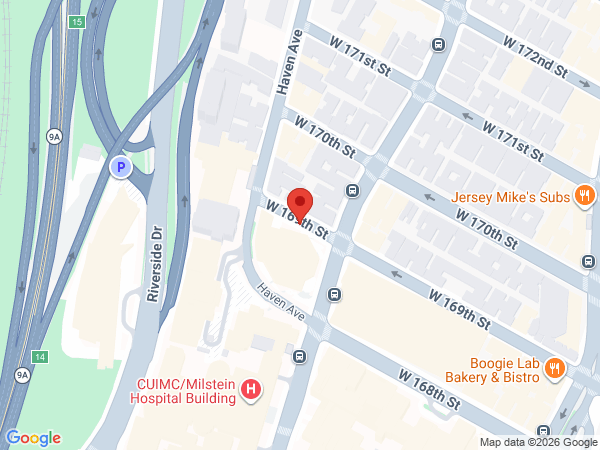
Location and Contact Information
Principal Investigator

At the Statistical Functional Genomics Lab (#StatFunGen), we use naturally occurring genetic differences among people as perturbations to study gene regulation, cellular function, and disease. We develop statistical and computational methods to trace these effects in
population-scale genetic and molecular data and study how the resulting molecular changes contribute to complex traits, with a focus on neurodegenerative disease.
Research Overview
Genetic studies can tell us where in the genome to look for clues to a disease. At the Statistical Functional Genomics Lab (#StatFunGen), we investigate what causes molecular changes in the cell and whether those changes help explain why some people are more susceptible to disease than others. We use naturally occurring genetic differences among people as perturbations to study gene regulation and cellular function. Alzheimer’s disease is a major focus of our work and a model for developing and testing ideas about how genetic variation shapes complex traits.
We approach these questions in the spirit of Leo Breiman’s description of what statisticians do: “gather good information, analyze information, and draw conclusions.” We start by deciding what to measure in human samples, from protein levels in cerebrospinal fluid to gene activity in specific brain cell types. We develop statistical methods to narrow down which DNA variants could explain the differences we observe and work with neuroscientists to study their functions. In one Alzheimer’s study, for example, we linked a risk signal to protein levels in the cortex and to the activity of a gene network involved in cellular recycling in a particular type of neuron. We can now test which gene links the protein to the network in those neurons and whether altering the network affects disease pathology in cell or animal models.
We lead FunGen-xQTL, a collaborative effort within the Alzheimer’s Disease Sequencing Project Functional Genomics (FunGen-AD) Consortium. Our collaborators at Columbia University, Rush University, the Allen Institute, Washington University in St. Louis, and the New York Genome Center bring unique data and expertise to our projects, enabling us to distinguish shared genetic effects from those specific to a particular cell type or ancestral background, and to examine how these effects vary with age or disease. We share the data behind our Alzheimer’s findings so researchers can examine the molecular evidence at individual risk loci. We release our methods as software they can use in their own studies of other tissues and diseases.
Lab Members


Select Publications
Buen Abad Najar CF, Feng R, Dai C, Fair B, Hauck Q, Li J, Cao X, Dey KK, De Jager P, Bennett D, The Alzheimer’s Disease Sequencing Project Functional Genomics Consortium, Liu X, Wang G, Li YI. Genetic and functional analysis of unproductive splicing using LeafCutter2. In Press at Nature Genetics (2026). doi: 10.1101/2025.04.06.646893
Liu A, Sun H, Carbonetto P, De Jager P, Bennett D, Stephens M, Wang G, Denault WRP. mfSuSiE Enables Multi-cell-type Fine-mapping and Multi-omic Integration of Chromatin Accessibility QTLs in Aging Brain. Under review, (2025). doi: 10.1101/2025.11.25.690439
Denault WRP, Carbonetto P, Li R, The Alzheimer’s Disease Functional Genomics Consortium, Wang G, Stephens M. Accounting for uncertainty in residual variances improves calibration of the Sum of Single Effects model for small sample sizes. Under review, (2025). doi: 10.1101/2025.05.16.654543
Zhang Y, Wang W, Tan ZY, Tong Y, Xu C, Liu A, Sim D, Jin S, Tian C, Comandante Lou N, Roca X, de Jager P, Bennett D, The Alzheimer’s Disease Functional Genomics Consortium, Wang G, Liu B. Single-cell splicing analysis with ISSAC links cell type-specific and cell state-dependent sQTLs to neurological disorders. Under review, (2025). doi: 10.64898/2026.05.06.26352548
Cao X, Sun H, Feng R, Mazumder R, Buen Abad Najar CF, Li YI, de Jager PL, Bennett D, The Alzheimer’s Disease Functional Genomics Consortium, Dey KK, Wang G. Integrative multi-omics QTL colocalization maps regulatory architecture in aging human brain. Under review, Nature Genetics (2025). doi: 10.1101/2025.04.17.25326042
Lakhani CM, Cavalca G, Liu A, Nidumbur R, Feng R, Raj T, de Jager PL, The Alzheimer’s Disease Functional Genomics Consortium, Wang G, Knowles DA. Machine Learning-Based Prediction of Cell-type Resolved Brain eQTLs Enhances Discovery of Variants Explaining Alzheimer’s Disease Heritability. Under review, (2025). doi: 10.64898/2025.12.03.25341562
Cifello J, Feng R, Grenn FP, Carter L, Liu A, Sun H, Li R, Empawi JA, Sun H, Greenfest-Allen E, Katanic Z, Valladares O, Kuzma AB, White H, Farrer LA, Goate AM, Raj T, Wang M, Cruchaga C, Wang L, Klein H, Chen H, ADSP Functional Genomics Consortium, de Jager PL, Marcora E, TCW J, Zhang X, Kuksa PP, Wang G, Leung YY. A TAD-informed aging-brain xQTL atlas of multi-modal and cell-type-resolved regulatory variation. Under review, (2025). doi: 10.64898/2026.05.21.26353713
Liu C, Wang A, Sun H, Luo K, Qian S, Li Y, Nachun D, He X, de Jager PL, Bennett D, Wang M, Cruchaga C, The Alzheimer’s Disease Functional Genomics Consortium, Wang G, Morgante F. A Multi-Context Regulome-Wide Association Atlas for Genetic Studies of Aging Brain Disorders. Under review, (2025). doi: 10.64898/2026.05.15.26353329
Li R, Feng R, Liu A, Cao X, De Jager P, Bennett D, Jiang T, The Alzheimer’s Disease Functional Genomics Consortium, Wen J, Wang G. Neuroimaging-derived Brain Endophenotypes Link Molecular Mechanisms to Alzheimer’s Disease and Aging. Under review, (2025). doi: 10.1101/2025.11.25.25340884
Liu A, Jiang R, Li R, Qi Z, Cao X, Dey KK, De Jager P, Bennett D, The Alzheimer’s Disease Functional Genomics Consortium, Wang T, Wang G. Distributional genetic effects reveal context-dependent molecular regulation in human brain aging and Alzheimer’s disease. Under review, (2025). doi: 10.21203/rs.3.rs-8219833
Buen Abad Najar CF, Xie D, Feng R, Carbonetto P, Cao X, Li H, Fang L, The Alzheimer’s Disease Sequencing Project Functional Genomics Consortium, Wang G, Stephens M, Li YI. Reference-free isoform discovery links unannotated RNA processing to disease risk. Under review, (2025). doi: 10.64898/2026.10.21.760529
Cao X, Wang Y, Sun H, Feng R, Zhang H, Li Y, Lee H, Karaahmet B, Li B, Gersbach C, Crawford G, Taga M, Schnaider Beeri M, Buchman AS, Klein H, de Jager PL, Bennett D, The Alzheimer’s Disease Functional Genomics Consortium, Wang G, Dey KK. A multi-scale cell-type resolved map of trans-regulatory architecture in the aging human brain. Under review, (2025). doi: 10.64898/2026.11.05.26367384
McCreight A, Cho Y, Li R, Nachun D, Gan H, Carbonetto P, Stephens M, Denault WRP, Wang G. SuSiE 2.0: improved methods and implementations for genetic fine-mapping and phenotype prediction. Under review, (2025). doi: 10.1101/2025.11.25.690514